
Jennifer Hanna brings a variety of “hats” to her efforts to help educators recognize the challenges faced by students who are military dependents.
Hanna, assistant principal at Eisenhower Middle School, was a “military brat” herself, as well as a soldier, the wife of a soldier and the mother of a military air traffic controller. She’s taught military dependents in public school secondary classrooms and at the college level.
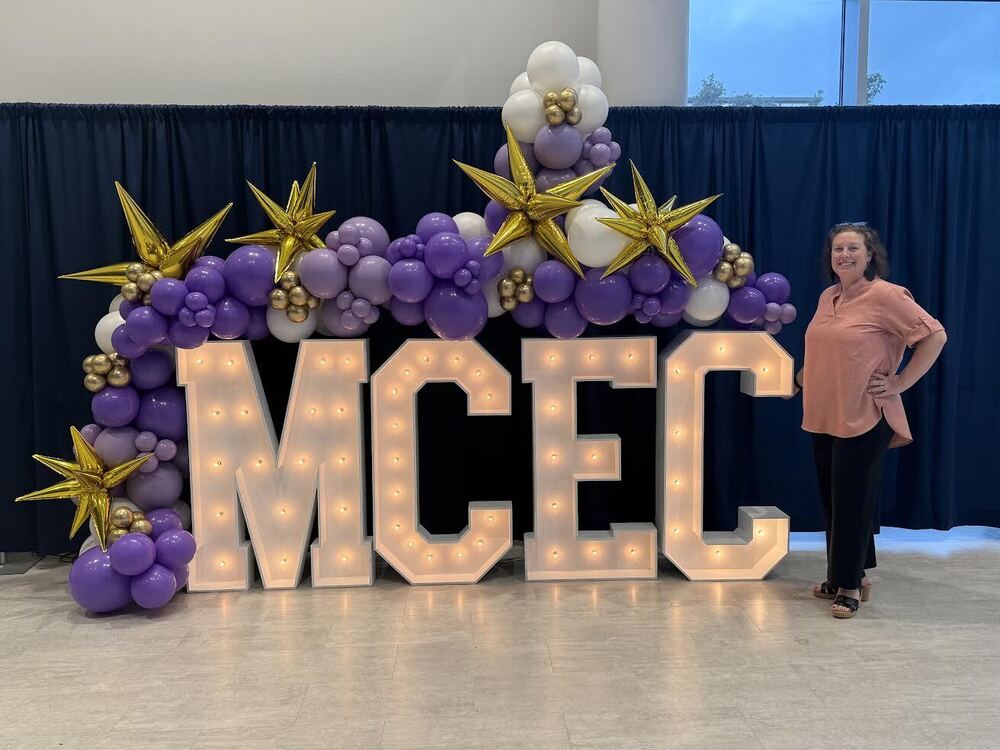
So, it was only natural that the dissertation topic for her doctorate was what she calls Forgotten Conscripts, military-connected adolescents as an invisible minority in public schools. It also was the lecture topic she presented at the Military Child Education Coalition 2026 Global Training Summit in San Antonio this summer.
Hanna said her choice of the term Forgotten Conscripts was deliberate.
“That is essentially what has happened: their parents may have chosen the military as a noble, honorable career, but the children didn’t get to choose that path; they were conscripted into it,” she said.
That was what she highlighted during her lecture to administrators, teachers and other school leaders who work with military families in their districts, focusing on how an identity formed in adolescent years “helps serve as a form of protection as they navigate the extra hardships and obstacles that come with being a military kid and a teenager.”
The multiple ways the military has influenced her own life means the topic is important for Hanna, which is why she chose it for her doctorate.
“Military culture is an important part of my life, and the lives of the many people in our community, so that alone makes it an important topic here,” she said. “However, the invisible part of this culture is what makes professional development like this necessary, because it is not easy to recognize a military-connected child by looks or sound alone.
“As I write in my book, they have no gait to their walk or accent to their speech, so they blend in with their civilian peers, which is problematic when these children need to be addressed.”
Hanna found another issue during her work: research into the topic of supporting military children is overwhelmingly centered on elementary students. That influenced her doctorate topic, as did the realization that existing research was done decades ago when the military “was vastly different.” Specifically: today’s military-connected students live in a world where their parents are deployed or engaged in conflict on a regular basis.
“The need for relevant and timely research on this population was greater than ever, so I knew I had a chance to provide something worthy,” she said of her doctoral thesis.
Her research with secondary students came over the 2018-2019 school year, and Hanna said she focused on the high school level because she was a teacher there. Today’s experience is with middle school students, where she is seeing the same patterns (the reason she will expand her research to that age range).
Her conference audience was receptive, Hanna said, adding an additional benefit for her was connecting with others who have dedicated their lives to supporting military students and families. She also enjoyed meeting those who had ideas about how to provide that support.
It’s a topic with wide applications, even in a military community where the assumption is that educators and others know about military students.
“I think the biggest thing most non-military families forget is that even though a military child has learned to navigate the ups and downs and demands of this life, that doesn’t mean the route gets easier as they get older,” Hanna said. “In fact, many of them just get better at learning to suck it up and keep moving forward because they know no other way to go.”
Hanna said even military families may forget those demands, and that’s the importance of her research.
“Our military teens are so adaptable and self-sacrificing, but they need a chance to speak up and voice their concerns, their worries, their fears, their dreams and their needs,” she said.